
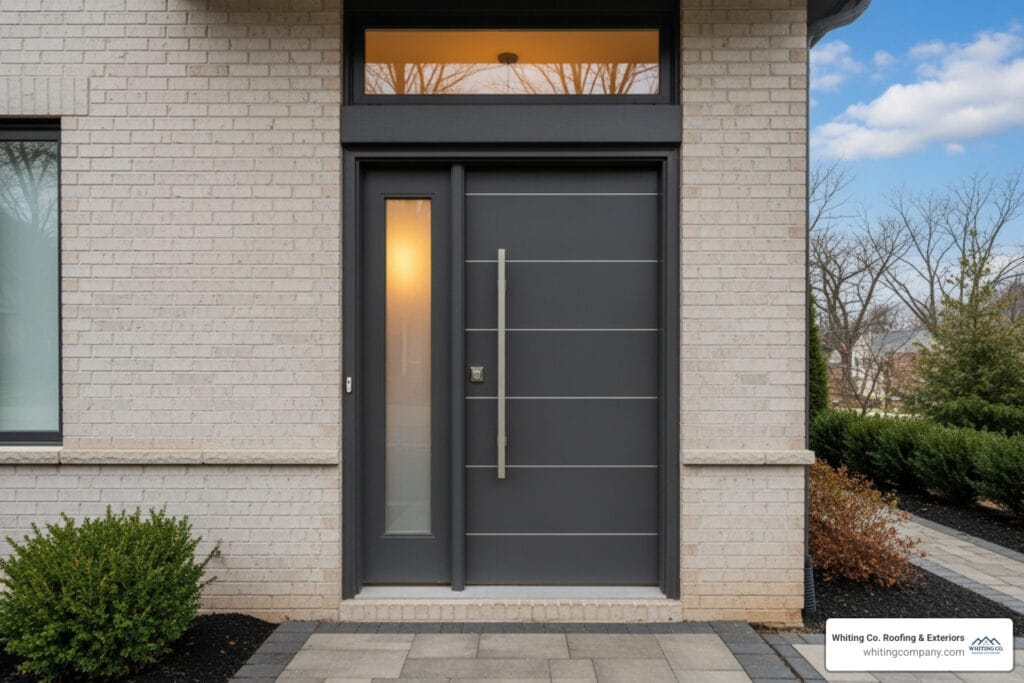
Commercial door repair vs. replacement is a critical decision that affects your business’s security, energy costs, and daily operations. The choice between fixing existing doors and installing new ones depends on factors such as damage severity, security needs, energy-efficiency goals, and long-term cost considerations.
This guide focuses specifically on helping business owners make informed decisions about their commercial door needs.
Commercial Door Assessment Definition: A systematic evaluation of door condition, security features, energy efficiency, and compliance standards to determine whether repair or replacement offers the best value and protection for your business.
Every business owner eventually faces this dilemma. Your front entrance sticks every morning. The back door doesn’t seal properly, letting in drafts and driving up energy bills. Security feels compromised when locks don’t engage smoothly. At Whiting Window Siding and Roofing, we understand these frustrations. Over the past 15 years, working with Maryland businesses, we’ve helped hundreds of companies navigate this decision. The most common mistake we see is waiting too long to address door problems, which often turns a simple repair into a costly replacement.
Signs Your Commercial Doors Need Attention
Recognizing problems early saves money and prevents security risks. Here’s what to watch for: Immediate repair needs:
- Minor frame damage or surface scratches
- Loose hinges or handles
- Weather stripping gaps
- Paint or finish wear
- Squeaking or minor sticking
Replacement indicators:
- Severe warping or structural damage
- Multiple break-in attempts or security breaches
- Energy bills are increasing due to poor sealing
- ADA compliance issues
- Doors over 15 years old with frequent problems
Thinking about this for your situation? Let’s talk. We’ll walk you through your options—no pressure.
Cost Analysis: Repair vs. Replacement
Understanding the true cost means looking beyond the initial price tag.
Repair Costs Breakdown
- Hardware replacement: $150-$400
- Weather stripping: $100-$250
- Frame adjustment: $200-$500
- Lock mechanism repair: $100-$300
- Surface refinishing: $300-$600
Replacement Investment
- Standard commercial door: $800-$2,500
- Security doors: $1,500-$4,000
- Energy-efficient doors: $1,200-$3,500
- Installation and permits: $300-$800
The 50% rule: If repair costs exceed 50% of replacement cost, replacement usually makes better financial sense. Recent data shows 70% of businesses that choose strategic replacement over repeated repairs save 20-30% on long-term door maintenance costs.
Security Doors vs. Standard Options: Which Approach Works?
Where security doors succeed: Maximum protection against break-ins, reinforced frames and locking systems, and insurance premium discounts for enhanced security features.
Where security doors fail: Higher upfront costs, limited design options, and potential maintenance complexity with advanced locking mechanisms.
Where standard doors succeed: lower initial investment, a wider variety of styles and finishes, easier maintenance, and availability of replacement parts.
Where standard doors fail: Basic security features, which make them more vulnerable to forced entry, may not qualify for insurance discounts.
The verdict: Choose security doors for high-risk locations, valuable inventory storage, or businesses requiring enhanced protection. Standard doors work well for low-risk environments with good lighting and foot traffic.
Energy Efficiency Considerations
Poor door sealing costs Maryland businesses hundreds annually in wasted energy. Energy-efficient doors pay for themselves through reduced heating and cooling costs. Energy efficiency features:
- Insulated cores (R-value 5-15)
- Magnetic weather sealing
- Thermal break technology
- Low-E glass options
- Automatic door closers
Businesses upgrading to energy-efficient doors typically see a 15-25% reduction in energy costs within the first year.
ADA Compliance and Your Business
ADA compliance isn’t optional. Non-compliant doors create liability and accessibility barriers. Required specifications:
- 32-inch minimum clear width
- Maximum 5 pounds opening force
- Automatic operators for heavy doors
- Proper threshold height
- Adequate maneuvering clearance
Retrofitting existing doors for ADA compliance often costs more than replacement with compliant models.
Your Commercial Door Action Plan
- Step 1 – Assessment: Document current door conditions, security needs, and energy concerns
- Step 2 – Cost Analysis: Compare repair estimates against replacement quotes, including long-term savings
- Step 3 – Compliance Check: Verify ADA requirements and local building codes
- Step 4 – Timeline Planning: Schedule work during low-traffic periods to minimize disruption
- Step 5 – Professional Installation: Choose licensed contractors with commercial door experience
For more information about our complete approach, visit our services page.
Minimizing Business Disruption
Timing is everything. Plan door work during:
- Off-season periods
- Scheduled maintenance windows
- Weekend or evening hours
- Slow business days
Having worked with 200+ Maryland businesses, firms that plan door projects properly experience 80% less operational disruption compared to emergency replacements.
Key Takeaways for Business Owners in 2026
- Cost threshold – Replace when repairs exceed 50% of the replacement cost
- Security priority – Invest in security doors for high-risk locations
- Energy savings – Efficient doors reduce costs 15-25% annually
- Compliance requirement – ADA standards are legally mandatory
- Timing strategy – Plan projects during low-traffic periods
Frequently Asked Questions
How long do commercial doors typically last?
Quality commercial doors last 15-20 years with proper maintenance. Factors affecting lifespan include usage frequency, weather exposure, and maintenance quality.
What’s the average cost difference between repair and replacement?
Repairs typically cost 20-40% of the replacement price for minor issues. Major repairs often reach 60-70% of replacement cost, making new doors the better value.
How quickly can commercial door replacement be completed?
Standard door replacement takes 4-6 hours per door. Custom or security doors may require 1-2 days, including hardware integration and testing.
Do I need permits for commercial door replacement?
Most commercial door replacements require building permits. Your contractor should handle permit applications and inspections as part of the service.
What security features should I consider for my business?
Essential features include reinforced frames, multi-point locking, and strike plate reinforcement. Add access control systems for higher security needs.
How do energy-efficient doors save money?
Proper insulation and sealing reduce HVAC workload by 15-25%. Savings typically offset door costs within 3-5 years through lower utility bills.
Can existing doors be upgraded to comply with ADA requirements?
Some doors can be retrofitted, but replacement is often less expensive. Width requirements and hardware specifications frequently necessitate complete door system replacement.
What maintenance extends the lifespan of a commercial door?
Regular hinge lubrication, weatherstripping inspection, and hardware adjustment help prevent major problems. Schedule professional maintenance annually for best results.
How do I choose between different door materials?
Steel offers security and durability, aluminum provides weather resistance, and fiberglass combines both benefits. Consider your climate, security needs, and maintenance preferences.
What warranty should I expect on commercial doors?
Quality doors include 5-10 year manufacturer warranties plus installation guarantees. Extended warranties are available for premium door systems.
Ready to Make the Right Choice?
Don’t let door problems compromise your business security or energy efficiency. Whether you need repairs or replacement, the right decision protects your investment and keeps operations running smoothly. The businesses that thrive in 2026 make proactive decisions about their infrastructure. Waiting until doors fail costs more and creates unnecessary stress. Ready to take the next step? Contact us today for straight answers and real solutions. We’ll assess your situation, explain your options clearly, and help you make the choice that’s right for your business and budget.