
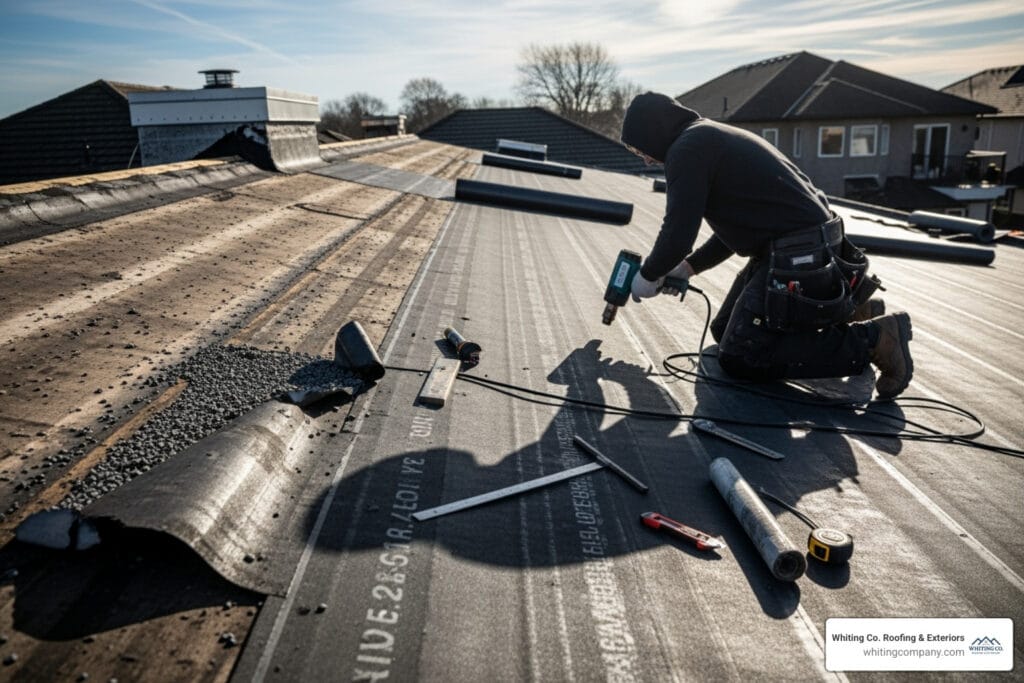
Roof leak repair is the immediate process of stopping water intrusion and fixing damaged roofing materials to prevent further property damage. Quick action can save thousands in water damage and structural repairs.
This guide focuses on emergency roof-leak response and professional repair options for Maryland homeowners.
Roof Leak Emergency Definition: A roof leak emergency requires immediate action to minimize water damage, protect belongings, and prevent structural issues until professional repairs can be completed.
When you discover water dripping from your ceiling, panic sets in fast. But here’s the thing—the first few minutes matter most. What you do right now determines whether you’re looking at a simple repair or major water damage restoration.
At Whiting Window Siding and Roofing, we’ve responded to countless emergency calls in Odenton and throughout Maryland. The homeowners who act quickly always fare better than those who wait.
Stop the Leak: Your First 10 Minutes
Don’t waste time figuring out what caused the leak. Focus on damage control first.
Move everything valuable: furniture, electronics, and important documents, away from the leak area. Water spreads fast once it starts pooling.
Catch the water: Place buckets, pots, or tarps under the leak. If water is pooling in your ceiling and creating a bulge, poke a small hole in the center with a screwdriver. This prevents the ceiling from collapsing under the weight of water.
Turn off electricity: If water is near light fixtures or outlets, shut off power to that area at the circuit breaker. Water and electricity don’t mix.
Document everything: Take photos of the leak, water damage, and affected belongings. Your insurance company will need this evidence.
Thinking about this for your situation? Let’s talk. We’ll walk you through your options—no pressure.
Finding the Source: Where Most Leaks Start
Once you’ve controlled the immediate damage, you need to locate where water is entering. Here’s where we see most problems:
Roof flashing repair issues account for about 70% of leak calls. Flashing around chimneys, vents, and skylights fails first because it takes the most abuse from the weather.
Missing or damaged shingles: Wind and hail create obvious entry points. If you can safely see your roof from the ground, look for bare spots or curled edges.
Clogged gutters: When gutters overflow, water backs up under shingles. This is especially common in Maryland’s heavy spring rains.
Ice dams: During winter, ice prevents proper drainage and forces water under shingles.
Don’t climb on your roof to investigate. Even experienced roofers use safety equipment. A fall will cost way more than any leak repair.
DIY vs Professional: Which Approach Works?
Where DIY succeeds: Temporary fixes like roof patches, gutter cleaning, and emergency tarping can buy you time until professionals arrive.
Where DIY fails: Permanent repairs require proper materials, safety equipment, and knowledge of Maryland building codes. Most DIY fixes fail within months.
Where professional repair succeeds: Licensed contractors properly diagnose root causes, use commercial-grade materials, and provide warranties. Storm-damage roof repairs often qualify for insurance coverage.
Where professional repair fails: Cost and scheduling can be challenges, especially during storm season when demand peaks.
The verdict: Handle immediate damage control yourself, but call professionals for anything involving getting on the roof or permanent repairs.
Your Roof Leak Action Plan
- Step 1 – Immediate Response: Control water damage and document everything within the first hour.
- Step 2 – Temporary Protection: Apply emergency patches or tarps if you can do so safely from inside or ground level.
- Step 3 – Professional Assessment: Schedule an inspection within 24-48 hours to identify all damage and repair needs.
- Step 4 – Insurance Coordination: File claims promptly and work with contractors experienced in insurance processes.
- Step 5 – Complete Repairs: Address both visible damage and underlying issues to prevent future problems.
Storm Damage and Insurance: What You Need to Know
Maryland homeowners deal with significant weather challenges. Recent data shows that storm-damage roof repair claims increased by 40% in 2024 due to severe weather patterns.
Most insurance policies cover sudden damage from storms, wind, and hail. They typically don’t cover maintenance issues or gradual deterioration.
Document timing: If your leak appeared during or immediately after a storm, mention this to your insurance company. Storm-related damage is covered differently from maintenance issues.
Professional inspections help: Insurance adjusters respect detailed reports from licensed contractors. We’ve helped hundreds of homeowners successfully navigate the claims process.
For roof waterproofing and preventive measures, insurance rarely pays. But preventing leaks costs far less than repairing water damage.
When to Call for Emergency Service
Some situations can’t wait for regular business hours:
– Water is actively pouring in during a storm
– You notice ceiling sagging or cracking
– Water is near electrical fixtures
– The leak affects multiple rooms
– You smell mold or see discoloration spreading
Emergency tarping and temporary repairs can prevent thousands of dollars in additional damage. The cost of emergency services is usually far lower than that of water damage restoration.
Prevention: Stop Leaks Before They Start
Regular maintenance prevents most emergencies:
Annual inspections: Have your roof checked each spring to catch small problems before they become big ones.
Gutter maintenance: Clean gutters twice yearly and ensure proper drainage away from your foundation.
Tree management: Keep branches trimmed back from your roof to prevent damage during storms.
Attic ventilation: Proper airflow prevents ice dams and reduces moisture buildup that leads to rot.
For a complete overview of our services, including preventive maintenance programs, visit our services page.
Frequently Asked Questions
How quickly should I address a roof leak?
Address roof leaks immediately to prevent water damage and mold growth. Even small leaks can cause significant structural damage within 24-48 hours if not controlled.
Can I temporarily fix a leak myself?
Yes, temporary fixes like tarps or roof patches can control damage until professional help arrives. However, avoid climbing on wet or damaged roofs, and don’t attempt permanent repairs without proper experience.
How much does emergency roof leak repair cost?
Emergency roof repairs typically range from $300 to $ 1,500, depending on the extent of the damage. Simple patches cost less, while extensive flashing repairs or multiple leak sources increase costs.
Does insurance cover roof leak repairs?
Insurance typically covers sudden damage from storms but not gradual deterioration or maintenance issues. Document the timing and cause of your leak to improve your chances of coverage.
How long do roof leak repairs take?
Simple leak repairs take 2-4 hours, while complex issues may require 1-2 days. Weather conditions and material availability can affect timing.
Should I call a roofer or a general contractor?
Call a licensed roofing contractor for the fastest, most reliable repair. Roofing professionals have the right tools, materials, and experience for lasting fixes.
What happens if I ignore a small leak?
Small leaks quickly become major problems, leading to rot, mold, and structural damage. The cost of repairs increases dramatically the longer you wait.
Can roof leaks be prevented?
Most roof leaks can be prevented with annual inspections and regular maintenance. Catching small issues early prevents emergencies.
How do I know if my roof needs complete replacement?
Multiple leaks, widespread damage, or roofs over 20 years old may need replacement rather than repairs. A professional inspection can determine the most cost-effective solution.
What should I do while waiting for the repair crew?
Continue monitoring the leak, keep catching water, and document any changes. Take additional photos if damage spreads, and notify your insurance company promptly.
Key Takeaways for Maryland Homeowners in 2026
- Act fast – The first hour determines how much damage you’ll face
- Safety first – Don’t climb on damaged or wet roofs
- Document everything – Photos and timing help with insurance claims
- Professional help pays – Licensed contractors provide lasting solutions
- Prevention works – Annual maintenance prevents most emergency calls
Ready to Get Started?
Roof leaks don’t fix themselves, and waiting makes everything worse. Whether you’re dealing with an active emergency or want to prevent future problems, professional help gets you back to normal faster.
Ready to protect your home? Contact us today for straight answers and real solutions. We’ll assess your situation, explain your options, and get your roof watertight again.