
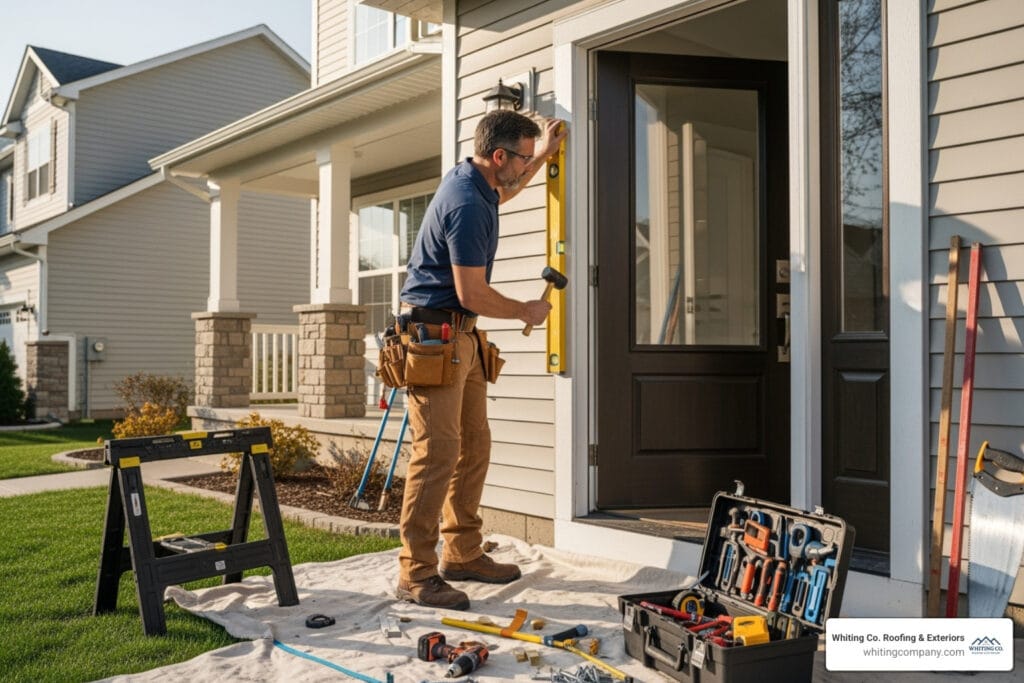
ProVia doors are premium entry doors that offer superior security, energy efficiency, and durability compared to standard residential doors. These high-end exterior doors typically cost 40-60% more than standard options but provide enhanced weather protection and curb appeal.
This guide focuses specifically on helping homeowners determine whether premium ProVia doors justify their higher cost for residential door replacement projects.
ProVia Door Definition: Premium fiberglass and steel entry doors manufactured with reinforced frames, multi-point locking systems, and energy-efficient cores designed for maximum security and weather resistance.
Are you staring at your front door, wondering if it’s time for an upgrade? You’re not alone. Many homeowners face this exact decision when their entry door begins to show wear or fails to provide adequate security and energy efficiency.
The question isn’t just about replacing your door—it’s about whether spending extra on a premium option like ProVia makes financial sense. After working with hundreds of homeowners on exterior door replacement projects, we’ve seen the real-world differences between standard and premium doors.
What Makes ProVia Doors Different from Standard Entry Doors?
ProVia doors stand apart from standard residential doors in several key areas. While a typical entry door from a home improvement store costs $300-800, ProVia doors range from $1,200 to $ 3,500 before installation.
The price difference reflects genuine construction improvements:
- Reinforced door frames with steel reinforcement
- Multi-point locking systems instead of single deadbolts
- Polyurethane foam cores for better insulation
- Weather stripping that actually seals properly
- Thicker gauge steel or higher-grade fiberglass
Frame Construction: Standard doors often have hollow or minimal reinforcement, while ProVia doors feature steel-reinforced frames that resist warping and forced entry.
The manufacturing process also differs significantly. ProVia doors undergo factory finishing in controlled environments, while many standard doors receive basic finishing that may not withstand weather exposure.
Security Features: Where Premium Doors Excel
Security represents the biggest advantage of ProVia doors over standard options. Recent data shows that 34% of burglars enter through the front door, making your entry door your first line of defense.
Standard entry doors typically feature:
- Single deadbolt locks
- Basic strike plates
- Hollow cores that can be kicked in
- Minimal frame reinforcement
ProVia security doors installation includes:
- Multi-point locking systems that secure at multiple frame points
- Reinforced strike plates with 3-inch screws
- Steel or solid foam cores
- Tamper-resistant hinges
The multi-point locking system alone makes forced entry significantly more difficult. While a standard door might withstand 100-200 pounds of force, properly installed ProVia doors can resist 500+ pounds.
Thinking about this for your situation? Let’s talk. We’ll walk you through your options—no pressure.
Energy Efficiency: Premium vs. Standard Performance
Energy efficiency differences between ProVia and standard doors become apparent on your utility bills. Standard doors often have R-values of 2-4, while ProVia doors achieve R-values of 6-12.
This translates to real savings. A poorly insulated entry door can account for 10-15% of your home’s energy loss. In Maryland’s climate, this means $150- $ 300 in wasted heating and cooling costs annually.
ProVia doors address energy loss through:
- Polyurethane foam cores that don’t settle over time
- Magnetic weather stripping that maintains seal integrity
- Thermal breaks that prevent heat transfer
- Low-E glass options for doors with windows
Standard doors often use basic weather stripping that compresses and loses effectiveness within 2-3 years. ProVia’s magnetic sealing systems maintain their effectiveness for decades.
ProVia Doors vs. Standard Doors: Which Approach Works?
Where ProVia doors succeed: Superior security features, excellent energy efficiency, manufacturer warranties up to lifetime, and consistent quality control.
Where ProVia doors fail: High upfront costs, limited availability requiring special orders, and installation complexity that demands experienced contractors.
Where standard doors succeed: Low initial investment, wide availability at local stores, simple installation process, and adequate performance for budget-conscious homeowners.
Where standard doors fail: Poor long-term durability, minimal security features, higher energy costs, and frequent replacement needs.
The verdict: ProVia doors justify their cost for homeowners who prioritize security, energy efficiency, and long-term value, while standard doors are better suited to temporary solutions or rental properties.
Cost Analysis: Total Investment Over Time
Understanding the true cost difference requires looking beyond the initial purchase price. Here’s what residential door replacement typically costs:
Standard Door Total:
- Door: $400-800
- Installation: $200-400
- Total: $600-1,200
ProVia Door Total:
- Door: $1,200-3,500
- Installation: $400-800
- Total: $1,600-4,300
However, the 10-year cost tells a different story. Standard doors often need replacement every 8-12 years, while ProVia doors can last 25+ years. Factor in energy savings of $200+ annually, and the premium door often costs less over its lifetime.
At Whiting Window Siding and Roofing, we’ve tracked door performance for clients in Odenton, Maryland, and surrounding areas. Homes with ProVia doors have 15-20% higher energy-efficiency ratings and virtually no security-related door failures.
Installation Considerations for Premium Doors
ProVia doors require precise installation to deliver their promised performance. Multi-point locking systems and reinforced frames require precise measurements and proper alignment.
Standard doors are more forgiving during installation. A slightly off measurement or imperfect alignment rarely affects basic function. ProVia doors, however, won’t operate properly if installed incorrectly.
Professional installation becomes essential with premium doors. The additional cost pays for itself through proper operation and warranty protection. Many ProVia warranties are voided by improper installation.
For more information about our installation process and other services, visit our services page.
Making the Right Choice for Your Home
Your decision should consider several factors beyond just door price. Evaluate your home’s location, security needs, energy efficiency goals, and long-term plans.
Choose ProVia doors if you:
- Plan to stay in your home 10+ years
- Live in an area with security concerns
- Want to reduce energy costs
- Value premium aesthetics and curb appeal
Standard doors make sense if you:
- Need a quick, budget-friendly replacement
- Plan to move within 5 years
- Have minimal security concerns
- Prioritize initial cost savings
Key Takeaways for Homeowners in 2026
- Security Investment – ProVia doors provide genuine security improvements worth the premium for most homeowners
- Energy Savings – Premium doors typically pay for themselves through reduced utility costs over 8-12 years
- Installation Matters – Professional installation is crucial for premium doors to perform as designed
- Long-term Value – Quality doors last 2-3 times longer than standard options, reducing replacement frequency
- Local Climate – Maryland’s weather conditions favor the superior weather sealing of premium doors
Frequently Asked Questions
How much more do ProVia doors cost than standard entry doors?
ProVia doors typically cost 50-70% more than standard entry doors when including professional installation. The total investment ranges from $1,600 to $4,300, compared to $600 to $1,200 for standard doors, but energy savings and longevity often offset the difference.
Do ProVia doors really provide better security than standard doors?
Yes, ProVia doors offer significantly better security through multi-point locking systems and reinforced construction. They can withstand 2-3 times the force of standard doors and include tamper-resistant features that deter break-ins.
How long do ProVia doors last compared to standard doors?
ProVia doors typically last 25-30 years, while standard doors need replacement every 8-12 years. The superior materials and construction quality result in better long-term durability and performance.
Are the energy savings from ProVia doors worth the extra cost?
Most homeowners save $150-300 annually on energy costs with ProVia doors. These savings, combined with the door’s longer lifespan, often make the premium investment cost-neutral or profitable over time.
Can I install a ProVia door myself to save money?
Professional installation is strongly recommended for ProVia doors to ensure proper operation and warranty coverage. The precision required for multi-point locking systems and reinforced frames makes DIY installation risky and potentially voids the warranty.
Do ProVia doors work in Maryland’s climate?
ProVia doors are well-suited to Maryland’s variable climate, with hot summers and cold winters. Their superior weather sealing and insulation perform well in temperature extremes, and help reduce energy costs year-round.
Does my current door need replacement?
Replace your door if you notice drafts, difficulty opening/closing, visible damage, or inadequate security features. Energy loss around the door frame and worn weather stripping are also clear signs of replacement.
What maintenance do ProVia doors require?
ProVia doors require minimal maintenance beyond annual cleaning and lubrication of locking mechanisms. The factory-finished, high-quality materials resist weather damage and maintain their appearance with basic care.
Do premium doors increase home value?
Quality entry doors typically return 60-80% of their cost in increased home value. Premium doors also improve curb appeal and can make homes more attractive to potential buyers.
How long does door replacement installation take?
Professional door replacement usually takes 4-6 hours for standard installations. Complex installations with frame modifications or security system integration may require a full day.
Ready to Upgrade Your Entry Door?
The decision between ProVia and standard doors ultimately depends on your priorities, budget, and long-term plans. For most homeowners, the enhanced security, energy efficiency, and durability of premium doors justify the higher initial investment.
If you’re ready to explore your residential door replacement options, we’re here to help. Our team can assess your current door, discuss your needs, and provide honest recommendations based on your situation.
Ready to take the next step? Contact us today for straight answers and real solutions. We’ll provide a detailed assessment and help you choose the door that best fits your home and budget.