

When Your Roof Demands Immediate Action
Emergency roof services are critical when your roof threatens your home’s structure, safety, or contents. Active leaks, missing roof sections, or structural sagging demand immediate help—not next week.
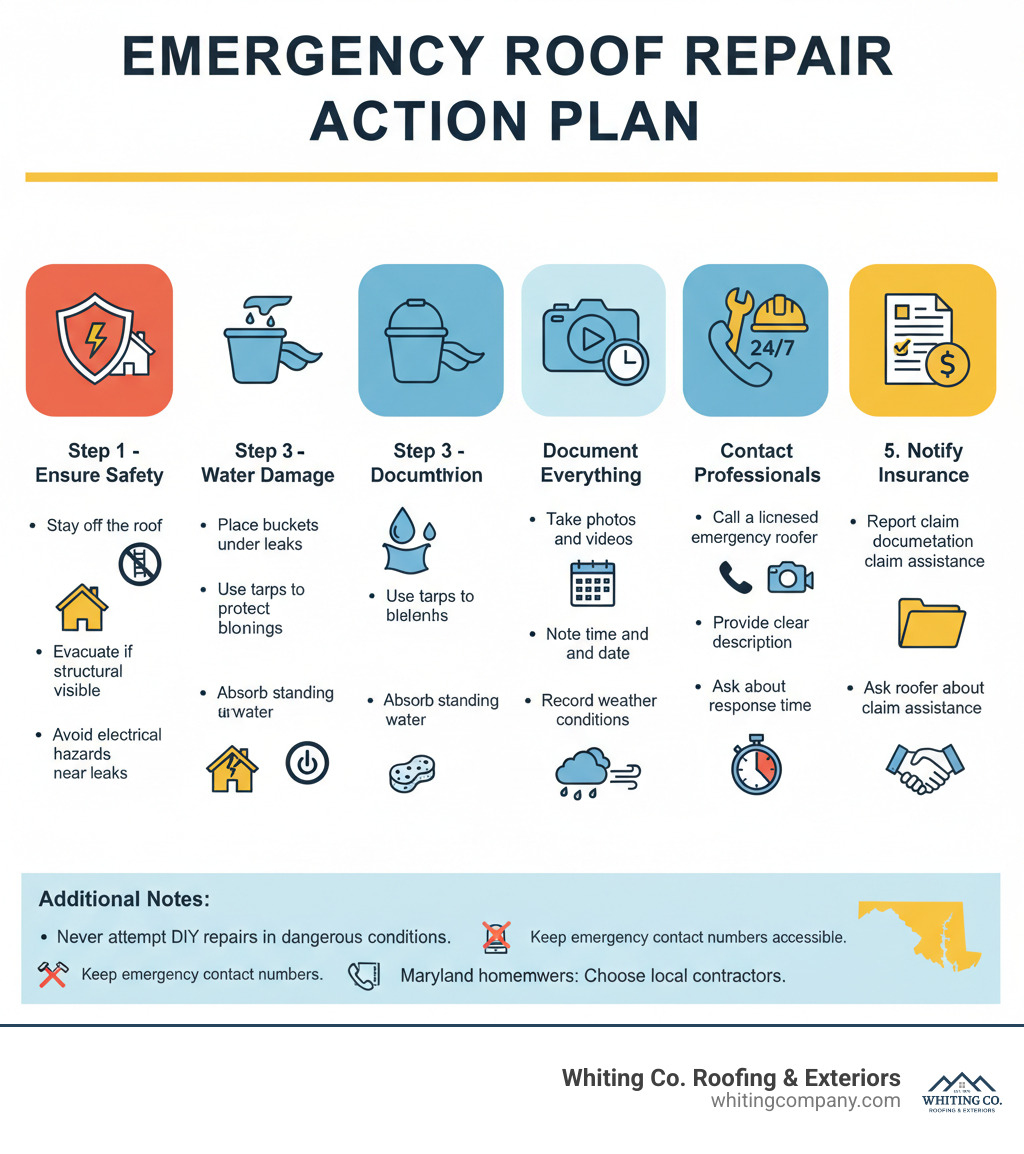
Here’s what to do immediately:
- Protect your interior: Place buckets under leaks and move valuables to a dry area.
- Document the damage: Take clear photos and videos for your insurance claim.
- Call a licensed professional: Contact a trusted roofing contractor offering 24/7 emergency response.
You’re facing an emergency if:
- Water is actively entering your home.
- Your attic or interior is exposed to the elements.
- You see structural sagging or risk of collapse.
- Water is near electrical components.
- A large hole exists from a fallen tree or storm debris.
Acting quickly is crucial to prevent severe damage. A small leak can quickly lead to mold, rot, and ruined insulation, as every minute counts once water breaches your roof. This guide walks you through identifying an emergency, protecting your home, and understanding the repair process.
With the right steps and a qualified professional, most roof emergencies can be stabilized within hours. I’m Tim Whiting, owner of Whiting Window Siding and Roofing Roofing & Exteriors. With nearly five decades of experience in Maryland, we know that quick, professional action can prevent a manageable fix from becoming a catastrophe.
Emergency roof services definitions:
Is It a Real Emergency? How to Identify Critical Roof Damage
Not every roof problem is an emergency, but knowing the difference is key. The main question is: “Can this wait, or do I need help right now?”
A situation is an emergency if it threatens your home’s structure, your family’s safety, or your belongings. This includes major leaks, large holes, or visible sagging that compromises your roof’s ability to keep you dry and safe. In Maryland, severe weather means that what starts as a small leak can quickly escalate, leading to ruined insulation, dangerous mold, and costly structural failure.
Every minute matters when water breaches your roof. To help you make the right call, here’s what separates a true emergency from a less urgent issue:
| Emergency Signs (Call Immediately!) | Urgent but Non-Emergency Signs (Schedule Promptly) |
|---|---|
| Active, uncontrolled water leak, especially near electrical | Minor leaks or gaps in flashing (not actively gushing) |
| Home’s interior or attic exposed to the elements | One or two missing or broken shingles |
| Structural sagging or visible risk of roof collapse | Hail damage without immediate leaks or structural compromise |
| Large holes in the roof from fallen trees, debris, or pests | Limited condensation in the attic |
| Significant ice or snow accumulation causing excessive roof weight | Roof vent clogs (not causing immediate leaks) |
| Fire damage to any part of the roof structure | Small skylight leaks (slow drip, not flooding) |
| Moss or algae growth on the roof | |
| Lack of granule on asphalt shingles (aesthetic, not structural threat) |
What Causes Roof Emergencies in Maryland?
Maryland’s weather swings from brutal thunderstorms to icy blizzards, putting immense stress on our roofs.
-
Storm, Wind, and Hail Damage: High winds can rip shingles off, while heavy rain exploits any weakness. Hail can puncture roofing materials, creating hidden entry points for water. After a major storm, an inspection is always a good idea. For more details, see our Signs Your Roof Needs Repair: A Guide for Maryland Homeowners.
-
Fallen Trees or Debris: A large branch or tree crashing through your roof creates massive holes and potential structural damage, requiring immediate emergency roof services.
-
Ice Dams: Common in Maryland winters, ice dams form when melting snow refreezes at the eaves, causing water to back up under shingles and leak into your home. Proper insulation and ventilation are preventive, but active leaks require fast help.
-
Pests: Raccoons and squirrels can chew through roofing materials, creating openings that expose your home to the elements and require immediate attention.
Recognizing these signs helps you know when to call for emergency help and when you can schedule a routine repair.
Your First 3 Steps: What to Do While You Wait for Help
When your roof fails, panic is natural, but the first few minutes are critical. Taking the right steps immediately can save you thousands in secondary damage. Before professional emergency roof services arrive, your priorities are safety, damage mitigation, and documentation.

Safety First: Stay Off the Roof!
The most important rule is: do not climb onto a damaged roof. It’s slippery, unstable, and dangerous. Attempting DIY repairs can turn a roofing emergency into a medical one. A compromised roof can have weakened structural supports or hidden punctures. If you see severe sagging or large holes, evacuate that area of the home. Your safety is the top priority.
Mitigate Interior Damage
With everyone safe, your next job is damage control. The goal is to contain the water and protect your belongings.
-
Catch the Water: Place buckets or trash cans under active leaks. If a ceiling is bulging with water, carefully puncture the center with a screwdriver to allow it to drain into a bucket, preventing a messy collapse.
-
Protect Valuables: Move furniture, electronics, and other valuables away from the leak. If an item is too heavy, cover it with a plastic tarp.
-
Remove Standing Water: Use towels, mops, or a wet-dry vacuum to absorb water from floors and carpets to prevent mold growth.
-
Address Electrical Hazards: If water is near outlets or light fixtures, shut off power to that area at the breaker box. Water and electricity are a deadly combination.
Document Everything for Insurance
This step is crucial for a smooth insurance claim. Thorough documentation proves the extent of the damage.
-
Take Photos and Videos: From the ground, capture images of the damaged roof. Inside, document the leaks, water stains, and any damaged belongings. Get both wide shots and close-ups.
-
Note the Details: Record the date and time you finded the damage and the current weather conditions. This timeline is important for your claim.
-
Create an Inventory: Make a quick list of damaged items. This record will support your claim for all affected areas.
Taking these steps to limit property damage can reduce repair costs and simplify your insurance claim. For severe weather events, our team can guide you through the entire Storm Damage Roof Replacement process. These actions are about protecting your family and minimizing damage while you wait for our team to arrive.
The Professional Process for Emergency Roof Services
Understanding the professional process for emergency roof services can reduce stress by setting clear expectations. Our approach is designed to secure your home quickly and plan for a permanent solution.
What to Expect from an Emergency Roof Assessment
A professional assessment is the foundation of any emergency response. It’s a comprehensive diagnosis that guides all subsequent repairs.
Our certified team arrives ready to evaluate your situation safely. We start by following strict safety protocols, especially on compromised structures. The inspection methodically identifies the source of the damage, tracing water intrusion back to its origin. We then assess structural integrity, checking decking and rafters for stress or weakness. This is critical, as unaddressed issues can lead to severe problems.
You’ll receive a written assessment with photos and a clear explanation of our findings, along with a repair versus replacement recommendation. We explain our reasoning so you can make an informed decision. This thorough approach ensures we solve the actual problem. Learn more at our Roof Inspection Services page.
Temporary Solutions: The Role of Emergency Roof Tarping
When we arrive for emergency roof services, our first mission is to stop the water. Professional emergency tarping provides an immediate shield against further damage to your home’s interior and structure.

Our crews use heavy-duty tarps and professional fastening systems to create a watertight seal that can withstand Maryland’s weather. For larger areas, we may use industrial-grade shrink wrap, while smaller leaks can be stopped with temporary patches. These measures buy the time needed to plan permanent repairs correctly.
Attempting DIY tarping is dangerous. Damaged roofs are unstable, and working at heights in poor conditions creates serious fall risks. Furthermore, improper repairs can cause more damage or even void your roof’s warranty. Letting licensed professionals handle the work protects both you and your warranty coverage.
Permanent Repairs and Navigating Insurance Claims
With your home stabilized, we focus on a permanent fix and guiding you through the insurance process.
Scheduling permanent repairs begins once we have a clear scope of work and any necessary insurance approvals. For material selection, we’ll help you choose the best options for your home, such as durable architectural shingles that stand up to Maryland weather. Our Shingle Roof Repair guide offers more detail.
We have decades of experience working with insurance adjusters and provide the detailed documentation they need to process claims efficiently. We’ll help you understand your claim and advocate for a fair settlement that covers all necessary repairs.
Always verify a contractor’s credentials. You can check any Maryland contractor’s license through the Maryland Department of Labor, Licensing and Regulation website. As a fully licensed and insured local team, Whiting Window Siding and Roofing Roofing & Exteriors is here for the emergency and the long-term solution.
Prevention and Preparation: How to Avoid Future Roof Emergencies
The best way to handle a roofing emergency is to prevent it. Proactive maintenance is key to your roof’s longevity, especially given Maryland’s stressful climate. A small issue caught early is far less costly than an emergency repair.
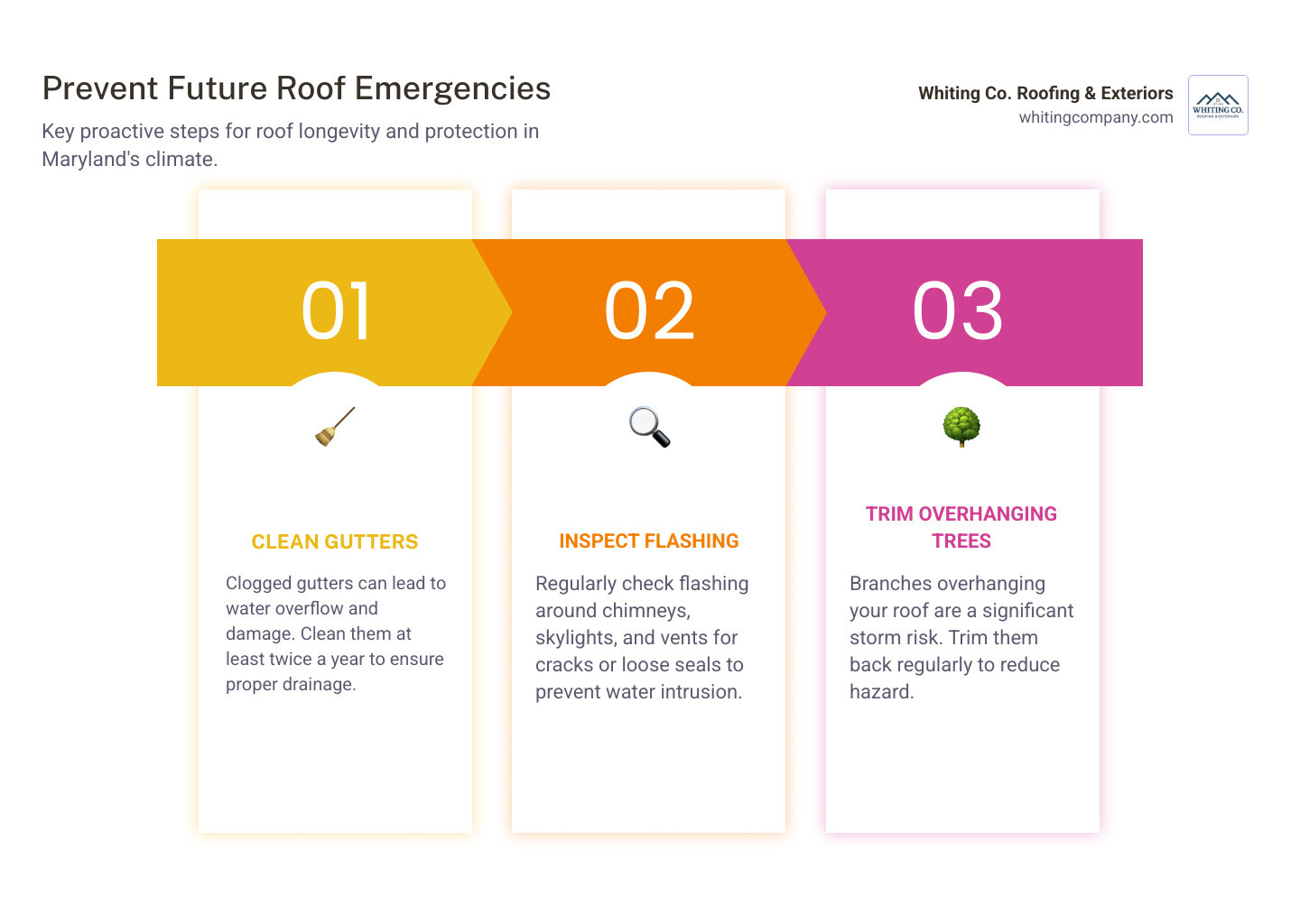
Here are key steps to protect your roof:
-
Clean Your Gutters: Clogged gutters cause water to back up under your roof. Clean them twice a year, especially in spring and fall, to ensure proper drainage.
-
Inspect Flashing: Check the seals around chimneys, skylights, and vents for cracks or rust. Failed flashing is a common source of leaks.
-
Trim Overhanging Trees: Branches can fall during storms and cause severe damage. Keeping them trimmed back reduces this risk and minimizes debris on your roof.
-
Schedule Professional Inspections: An annual inspection can spot loose shingles, minor leaks, or other issues before they become emergencies. An inspection is also wise after any major storm.
-
Ensure Proper Attic Ventilation: Good ventilation prevents ice dams in winter and heat buildup in summer, extending your roof’s life and preventing mold.
-
Monitor for Wear: Look for missing granules on shingles, cracked tiles, or blistering on flat roofs. Promptly addressing these signs of deterioration can prevent a major failure.
-
Clear Debris: Remove leaves and branches from your roof, as they trap moisture and accelerate material decay.
Taking these proactive steps significantly reduces the likelihood of needing emergency roof services. For a complete overview of roof care, see our Maryland Roof Replacement Guide. Regular maintenance is the most effective way to avoid a crisis.
Frequently Asked Questions about Emergency Roof Repair
When you’re facing a roofing emergency, you need clear answers. Here are the most common questions we hear from Maryland homeowners.
How quickly can emergency roofers respond?
Response times for emergency roof services typically range from a few hours to 24 hours. The exact time depends on factors like regional storm severity, current demand, and your location within our service areas like Columbia, Annapolis, or Odenton. At Whiting Window Siding and Roofing, we prioritize getting to you as quickly as possible to stop water intrusion.
What are the costs of emergency roof services compared to regular repairs?
Emergency roof services cost more than scheduled repairs, often 1.5 to 2 times the standard rate. This premium isn’t for profit; it covers the real costs of providing immediate service, including after-hours labor, rapid mobilization of crews and materials, and the increased risks of working in urgent conditions. While the upfront cost is higher, delaying repairs can lead to tens of thousands in secondary damages. For more on costs, see our Roof Repair Prices: Complete Guide.
What happens if I delay an emergency roof repair?
Delaying an emergency repair is a costly mistake that leads to catastrophic consequences. Every minute counts when water breaches your roof system.
Within 24-48 hours, you can face:
- Severe Structural Damage: Water rots roof decking and framing, compromising your home’s integrity.
- Toxic Mold Growth: Damp conditions create a breeding ground for mold, posing health risks and requiring expensive remediation.
- Ruined Insulation and Interiors: Wet insulation is useless, and water can destroy ceilings, walls, flooring, and personal belongings.
What might have been a manageable emergency repair can quickly become a massive renovation project. Insurance may also deny claims if you fail to mitigate damage promptly. Acting fast is crucial.
Conclusion: Secure Your Home with a Trusted Maryland Roofer

When a roof disaster strikes, every minute counts. Quick action can be the difference between a manageable repair and a catastrophic renovation. Emergency roof services are designed to protect your home when it’s most vulnerable.
The formula is simple: mitigate damage, document everything, and call a certified professional immediately. This prevents small problems from becoming disasters.
For Maryland homeowners, choosing a local contractor who understands our state’s unique weather challenges—from summer storms to winter ice dams—is essential. A roofer familiar with Maryland’s climate and building codes provides superior protection.
Whiting Window Siding and Roofing Roofing & Exteriors has protected homes across Central Maryland, including Columbia, Odenton, and Annapolis, for nearly five decades. We have proven systems to respond quickly and effectively. Our team knows which materials and techniques work best for Maryland weather and how to steer local insurance claims.
When your roof is compromised, you need a partner who will secure your home, guide you through the insurance process, and perform a lasting repair. Don’t let an emergency compromise your peace of mind. Our team is ready to provide prompt, reliable emergency roof services 24/7.
Get help from our residential roofing experts today—because your home’s protection can’t wait.