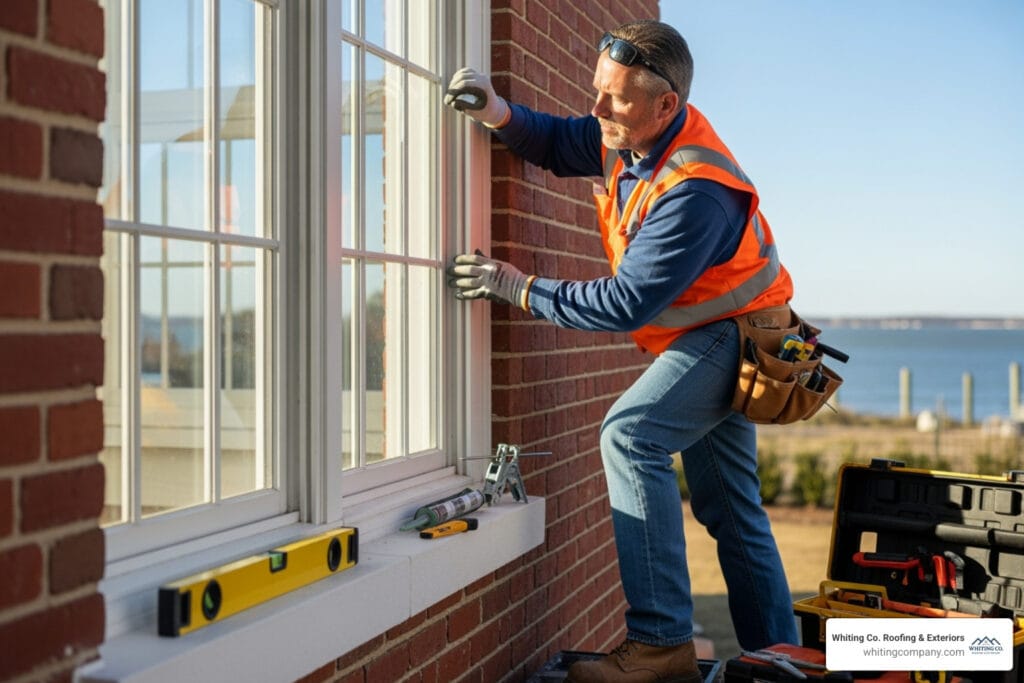
Energy-efficient home upgrades are improvements that reduce energy consumption while providing measurable financial returns through lower utility bills. The most effective upgrades focus on your home’s thermal envelope—windows, doors, and insulation—which can cut energy costs by 15-30% annually.
This guide focuses on the three highest-ROI energy-efficiency upgrades Maryland homeowners can make in 2026.
Energy Efficient Upgrades Definition: Strategic improvements to windows, doors, and insulation that reduce heat transfer, lower utility bills, and increase home comfort while providing measurable financial returns within 5-10 years.
With energy costs rising and Maryland’s variable climate, homeowners are looking for smart ways to cut monthly expenses. But here’s what most people don’t realize: not all energy upgrades deliver equal returns.
Over the past decade, working with homeowners in Odenton and throughout Central Maryland, we’ve seen which improvements actually pay off and which sound good on paper but fail to deliver real savings.
The Real Numbers: What Energy Upgrades Actually Save
According to recent data, the average Maryland household spends $3,600 annually on heating and cooling. Strategic upgrades can reduce this by $210-$420 per year.
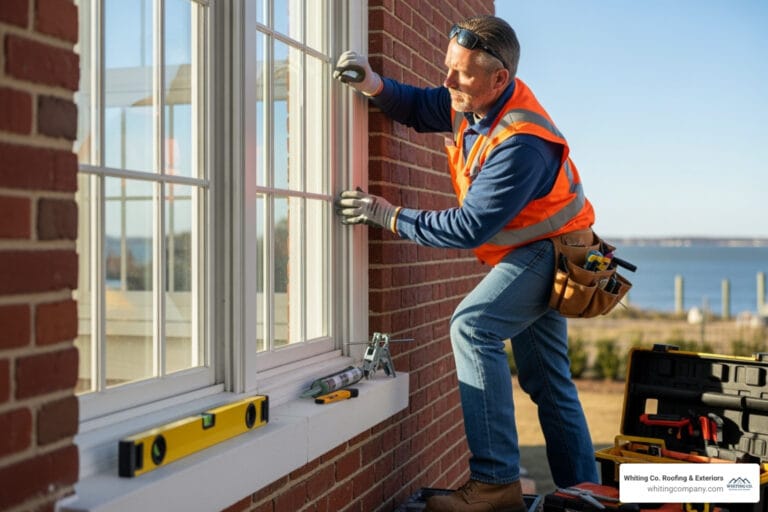
Window Replacement ROI: Quality vinyl windows typically cost $500 to $1,000 per window but can save $300-600 annually in a typical home. Payback period: 8-12 years.
Insulation Upgrade ROI: Adding attic insulation costs $1,500-3,000 but saves $200-400 yearly. Payback period: 5-8 years.
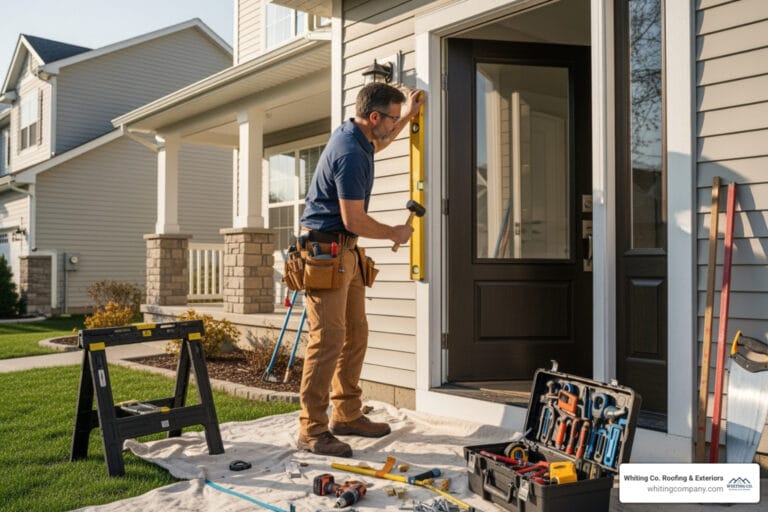
Energy Efficient Door Installation ROI: New exterior doors cost $800-2,500 each but can save $100-200 annually. Payback period: 6-10 years.
The most common mistake we see is homeowners focusing on trendy upgrades like smart thermostats while ignoring major heat loss through old windows and poor insulation.
Windows: Your Biggest Energy Loss (and Gain) Opportunity
Single-pane windows account for 25-30% of your home’s heating and cooling energy loss. Even older double-pane windows without low-E coatings waste significant energy.
Signs you need vinyl window installation:
- Condensation between glass panes
- Drafts around window frames
- Windows that won’t stay open
- Visible UV damage to furniture near windows
- High energy bills despite reasonable usage
Modern vinyl windows with double or triple-pane glass, low-E coatings, and argon gas fills can reduce heat transfer by 70% compared to single-pane windows.
Thinking about this for your situation? Let’s talk. We’ll walk you through your options—no pressure.
Insulation Services: The Hidden Money-Saver
Most homes built before 1980 have inadequate insulation. Even homes built in the 1990s often fall short of current energy-efficiency standards.
Proper attic insulation should measure R-38 to R-60 in Maryland’s climate zone. Many older homes have R-11 or less—meaning you’re literally heating and cooling the outdoors.
Where insulation makes the biggest difference:
- Attic spaces (highest priority)
- Crawl spaces and basements
- Wall cavities during renovations
- Around ductwork and pipes
Professional insulation services typically cost $1.50-4.00 per square foot but deliver some of the fastest paybacks of any home improvement.
Old Doors vs. New Energy-Efficient Doors: Which Approach Works?
Where old doors succeed: lower upfront cost, familiar operation, and maintenance of original home character.
Where old doors fail: Poor weatherstripping, single-pane glass, gaps that allow air infiltration, and a lack of modern insulation.
Where energy-efficient doors succeed: tight seals, insulated cores, double- or triple-pane glass, and advanced weatherstripping systems.
Where energy-efficient doors fail: higher initial investment, and they may not match historical home styles perfectly.
The verdict: Energy-efficient door installation pays off within 6-10 years through energy savings, plus provides improved comfort and security immediately.
Your Energy Efficiency Action Plan
- Step 1 – Energy Audit: Identify your biggest energy losses through professional assessment or DIY checks around windows and doors on windy days.
- Step 2 – Prioritize by ROI: Start with attic insulation (fastest payback), then window replacement in main living areas, and finally exterior doors.
- Step 3 – Get Multiple Quotes: Compare options from licensed contractors who can explain specific R-values and U-factors for your situation.
- Step 4 – Check Rebates: Maryland offers various energy efficiency incentives that can reduce project costs by 10-30%.
- Step 5 – Schedule Strategically: Plan insulation services for moderate weather and window and door installation for mild seasons.
At Whiting Window Siding and Roofing, we’ve helped hundreds of homeowners in Odenton and throughout Maryland make smart energy efficiency investments that actually pay off.
Frequently Asked Questions
How much do energy-efficient windows really save on utility bills?
Quality, energy-efficient windows typically save $300-600 annually on utility bills in Maryland homes. Savings depend on the condition of your current windows, your home’s size, and your energy usage patterns. Single-pane window replacement usually provides the highest savings.
What’s the best insulation for Maryland homes?
Blown-in cellulose or fiberglass insulation rated R-38 to R-60 works best for Maryland attics. Spray foam provides superior air sealing but costs more upfront. The key is achieving the proper R-value for our climate zone.
How long do energy-efficient doors last?
Quality, energy-efficient doors typically last 20-30 years with proper maintenance. Fiberglass doors often outlast wood doors in terms of durability, while steel doors offer maximum security and energy efficiency.
Should I replace all windows at once or do them gradually?
Gradual replacement, focusing on south- and west-facing windows first, usually provides the best financial approach. These windows experience the most heat gain and loss, delivering faster energy savings to help fund remaining replacements.
What R-value insulation do I need in Maryland?
Maryland homes need R-38 to R-60 attic insulation, R-13 to R-15 wall insulation, and R-25 to R-30 floor insulation. Current building codes require these minimum levels, but higher R-values often justify the additional cost through energy savings.
Do energy-efficient upgrades really pay for themselves?
Properly selected energy-efficient upgrades typically pay for themselves within 5-12 years through utility bill savings. Insulation usually has the fastest payback, followed by window replacement and energy-efficient doors.
How do I know if my current insulation is adequate?
Insulation is adequate if you can’t see ceiling joists in your attic, and it measures at least 12-15 inches deep. If joists are visible or insulation is compressed, matted, or less than 10 inches deep, you likely need additional insulation.
What’s the difference between vinyl and fiberglass windows for energy efficiency?
Both vinyl and fiberglass windows can achieve excellent energy efficiency when properly manufactured with quality glass packages. Fiberglass expands and contracts less than vinyl, potentially maintaining better seals in the long term, but vinyl windows often cost less initially.
When is the best time of year for energy-efficient home upgrades?
Fall and early spring typically offer the best combination of contractor availability and moderate weather for installations. Insulation can be installed year-round, while window and door projects work best during mild weather periods.
How much does professional insulation installation cost?
Professional insulation services typically cost $1.50-4.00 per square foot, depending on insulation type and access difficulty. Blown-in insulation costs less than spray foam, but both deliver significant energy savings when properly installed.
Key Takeaways for Maryland Homeowners in 2026
- Insulation First – Provides the fastest ROI and enables other upgrades to work more effectively
- Focus on Thermal Envelope – Windows, doors, and insulation deliver better returns than gadgets or appliances
- Quality Matters – Cheap installations often fail to deliver promised energy savings
- Strategic Timing – Rebates and financing options can significantly improve project economics
- Professional Assessment – Energy audits identify your specific opportunities for maximum savings
Ready to Start Saving on Energy Bills?
Energy-efficient upgrades aren’t just about going green—they’re smart financial investments that pay dividends every month through lower utility bills.
The best time to start was last year. The second-best time is now, especially with 2026 rebates and financing options available.
Ready to see real savings on your energy bills? Contact us today for a free assessment and straight answers about which upgrades make sense for your home and budget. Our services include comprehensive energy-efficiency solutions tailored to Maryland homes.