Why Choosing the Right Roofing Services in Maryland Matters
The roofing services in Maryland homeowners need most often include roof replacement, roof repair, roof installation, and regular inspections—all critical to protecting your home from the state’s harsh weather conditions.
Quick Answer: Top Maryland Roofing Services
- Roof Replacement – Full tear-off and installation of new roofing systems (average cost: $8,000-$15,000)
- Roof Repair – Fixing leaks, damaged shingles, and storm damage
- New Roof Installation – Complete systems for additions, garages, and new construction
- Roof Inspections – Professional assessments for insurance, real estate, or preventative maintenance
- Storm Damage Restoration – Emergency repairs and insurance claim assistance
- Commercial Roofing – Flat roofing systems and maintenance plans for businesses
Your roof protects everything you value. In Maryland, that means standing up to humid summers that test your shingles, winter ice that can damage flashing, and coastal storms that bring high winds and heavy rain.
The stakes are high. A failing roof can lead to interior water damage, mold growth, and thousands in unexpected repair costs. Maryland homeowners who wait too long to address roofing problems often find that a simple repair has turned into a full replacement.
The good news? Choosing the right roofing contractor transforms this major investment into lasting peace of mind. But how do you separate truly qualified professionals from the rest? What credentials matter? What should a proper estimate include? And how do you know if your roof actually needs replacement or just repair?
This guide answers all those questions. You’ll learn the warning signs that your roof needs attention, how to compare roofing materials for Maryland’s climate, what a fair price looks like, and exactly what to look for in a contractor—from GAF Master Elite® certification, which provides access to the industry’s strongest protections like the GAF Golden Pledge® Limited Warranty, to ironclad workmanship guarantees.
I’m Tim Whiting, owner of Whiting Window Siding and Roofing, and I’ve overseen more than 25,000 exterior projects across Maryland, D.C., and Virginia over nearly five decades, specializing in comprehensive roofing services homeowners trust for durability and transparency. Whether you need a simple repair or a complete roof replacement project, this guide will help you make the right decision.
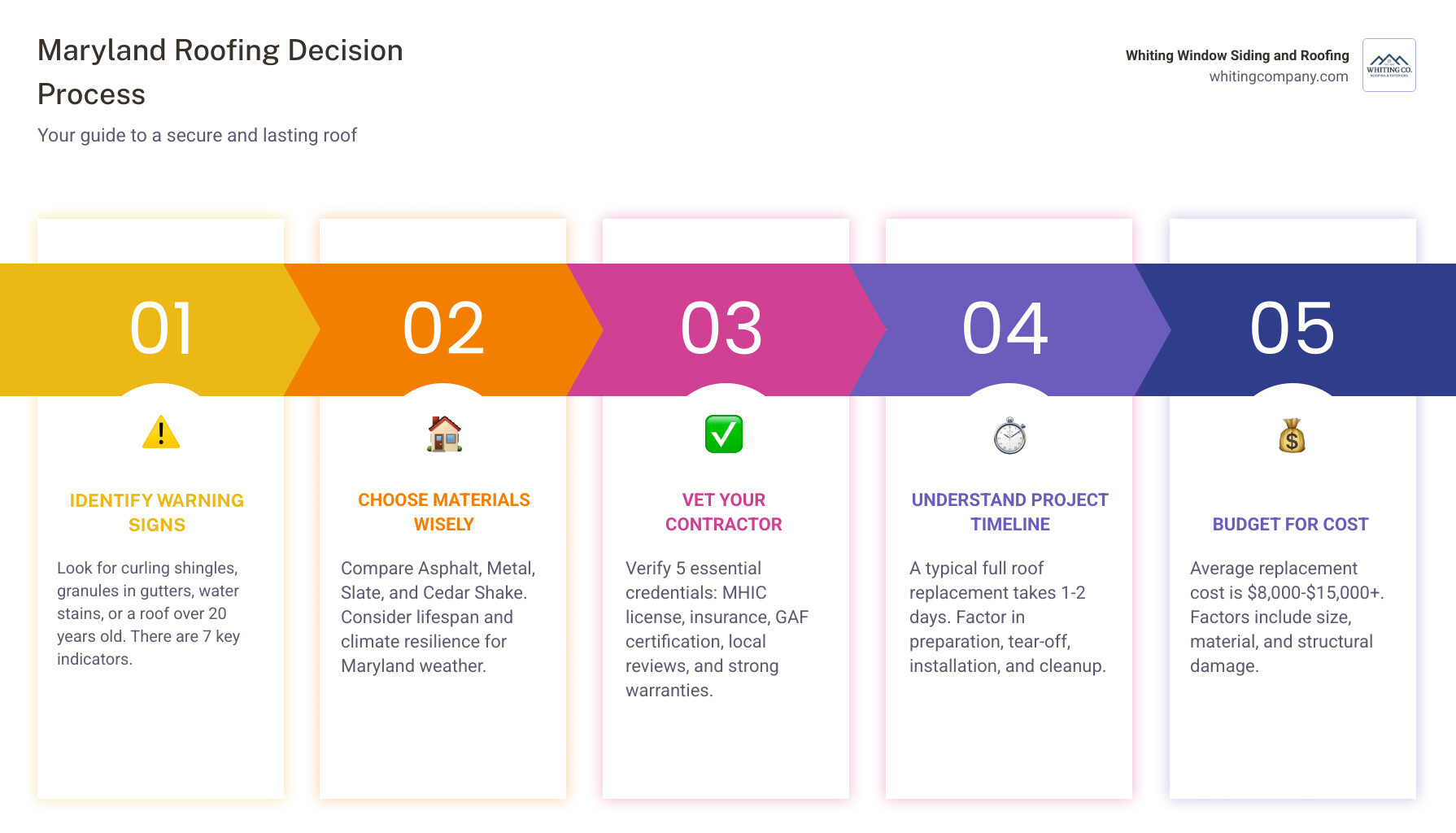
7 Telltale Signs Your Maryland Roof Needs Attention
Your roof works hard every single day. It faces Maryland’s humid summers, winter ice storms, and everything in between. Eventually, even the best roofs start showing their age—and the key is catching problems before they become emergencies.
Most homeowners don’t think about their roof until water starts dripping through the ceiling. By then, what could have been a simple repair has often turned into a much bigger (and more expensive) problem. That’s why knowing what to look for can save you thousands of dollars and a lot of stress.
Curling shingles are one of the first warning signs most homeowners notice. When shingles start to curl at the edges or cup in the middle, they’ve lost their ability to keep water out. This happens naturally as roofs age, but Maryland’s heat and humidity can speed up the process. If you see shingles that aren’t lying flat anymore, it’s time to call in professional roofing services in Maryland for an inspection.
Missing or cracked shingles tell you that your roof’s protective barrier has been breached. Strong winds during coastal storms can rip shingles right off, while years of sun exposure can cause cracks. Every missing shingle leaves your underlayment exposed to rain and moisture—a direct pathway for leaks to develop.
Here’s something many homeowners overlook: granules collecting in your gutters. Those small, sand-like particles coating asphalt shingles protect them from UV damage. As your roof ages, these granules wash off during rainstorms. A few granules are normal, but if your gutters look like they’re filled with coarse sand, your shingles are deteriorating and losing their protective coating.
Water stains on your ceilings or walls are the roof’s way of screaming for help. These brown or yellow marks mean water has already penetrated through your roof, attic, and insulation. Even small stains indicate a serious problem that will only get worse with time. Water damage doesn’t just stop at cosmetic issues—it can lead to mold growth and structural deterioration.
A sagging roof deck is not something to take lightly. If your roofline looks like it’s drooping or has a wavy appearance, you’re looking at a structural issue. This could mean rotted decking, compromised rafters, or serious moisture damage. This situation requires immediate professional attention, as it poses safety risks to your home and family.
If you venture into your attic and can see daylight through the roof boards, you’ve found direct evidence of gaps or holes in your roof structure. These openings allow water, pests, and outside air to enter your home freely. They’re also responsible for significant energy loss, making your heating and cooling systems work harder than they should.
Finally, consider the age of your roof. Most asphalt shingle roofs in Maryland last between 15 and 25 years, depending on the quality of materials and installation. If your roof is approaching or has passed the 20-year mark, it’s reached the stage where problems can develop quickly. Even without visible damage, scheduling a professional inspection makes good financial sense.
Catching these signs early makes all the difference. A minor issue caught today might require simple roof repair, while the same problem ignored for another year could necessitate a complete replacement. Our team provides honest assessments—we’ll tell you if you need a small fix or if it’s time for something more comprehensive. Learn more about identifying these warning signs in our detailed guide on Signs Your Roof Needs Repair.
Choosing Your Shield: A Guide to Maryland Roofing Materials & Lifespan
Your roof is more than just a covering—it’s your home’s primary defense system. In Maryland, where we experience everything from sweltering summer humidity in places like Odenton and Columbia to heavy winter snowfall across Central Maryland, selecting the right roofing material isn’t just about curb appeal. It’s about long-term performance and protection.
When homeowners search for roofing services maryland, they’re often surprised to learn how much our local climate impacts material performance. A roof that lasts 30 years in Arizona might only give you 20 here. That’s because Maryland’s unique weather patterns—intense UV exposure in summer, freeze-thaw cycles in winter, and year-round humidity—put extra stress on roofing materials.
Understanding how different materials perform in our specific climate helps you make a smarter investment. Some materials excel at shedding our frequent rain but struggle with ice dams. Others handle temperature swings beautifully but come with a premium price tag. The key is matching the material to both your budget and your home’s specific needs.
The Maryland Climate Factor: What Your Roof Faces Here
Before we dive into specific materials, let’s talk about what makes Maryland challenging for roofs. Humidity impact is significant—our muggy summers can promote algae growth and accelerate shingle deterioration. Snow load varies across the state, with areas like Frederick and Gaithersburg seeing considerably more accumulation than coastal regions. And those high winds from coastal storms? They test every fastener and seal on your roof.
These aren’t just abstract concerns. They directly affect how long your roof lasts and how much maintenance it requires. A material that’s “good enough” elsewhere might be a poor choice here.
Comparing Your Options: Materials That Work in Maryland
Here’s how the most common roofing materials stack up for Maryland homes:
| Material Type | Cost (Relative) | Lifespan in MD Climate | Pros | Cons |
|---|---|---|---|---|
| Asphalt Shingles | $4.50 – $8.00 per sq. ft. | 15-25 years | Most affordable option, wide variety of colors and styles, easy to install, readily available from local suppliers | Shorter lifespan than alternatives, susceptible to wind and hail damage, less energy efficient |
| Metal Roofing | $8.00 – $14.00 per sq. ft. | 40-70 years | Exceptional durability, excellent snow shedding, highly energy efficient, low maintenance requirements | Higher upfront cost, can be noisy during heavy rain without proper insulation |
| Slate | $15.00 – $30.00+ per sq. ft. | 100+ years | Best longevity, natural beauty, fire resistant, adds significant home value | Very expensive, requires specialized installation, heavy (may need structural reinforcement) |
| Cedar Shake | $8.00 – $12.00 per sq. ft. | 20-40 years | Natural insulation properties, distinctive aesthetic appeal, environmentally friendly | Requires regular maintenance, susceptible to moisture damage in humid climates, higher fire risk |
Asphalt Shingle Roofing remains the most popular choice for Maryland homeowners, and for good reason. It balances cost and performance effectively. However, if you’re dealing with an older slate roof that needs attention, professional Slate Roof Repair Maryland services can extend its life considerably.
Asphalt Shingles vs. Metal Roofing in Maryland
These two materials dominate Maryland’s residential roofing market, but they serve different priorities. Asphalt shingles win on cost-effectiveness—they’re the most budget-friendly option for roof installation, with a typical lifespan of 15-25 years in our climate. You’ll find them on the majority of Maryland homes, from Baltimore suburbs to rural areas.
Metal roofing represents a different value proposition. Yes, the upfront cost is roughly double that of asphalt, but the durability is exceptional—we’re talking 40-70 years of protection. In Maryland’s climate, metal roofing excels at shedding snow and resisting wind damage. The energy efficiency comparison is striking too: metal roofs reflect solar heat, potentially reducing cooling costs by 10-25% during our hot summers.
The aesthetic differences matter to many homeowners. Asphalt shingles offer traditional curb appeal with countless color and texture options. Metal roofing provides a more contemporary look, though modern metal products can mimic the appearance of traditional shingles or even slate.
Average Lifespan of Roofing Materials in Maryland’s Climate
When we talk about lifespan, we’re not just citing manufacturer warranties—we’re drawing on decades of real-world experience with Maryland roofs. Architectural shingles typically deliver 20-30 years here, which is on the lower end of their rated lifespan due to our weather extremes. Metal roofing often exceeds expectations, with many installations pushing past 50 years with minimal maintenance.
Natural slate stands in a category by itself, routinely lasting 100+ years when properly installed and maintained. Many historic Maryland homes still have their original slate roofs from the early 1900s. Cedar shake falls in the middle at 20-40 years, though Maryland’s humidity can push performance toward the lower end of that range without diligent maintenance.
Here’s what many homeowners overlook: proper installation matters as much as material choice. A premium material installed incorrectly won’t outlast a basic material installed expertly. That’s why choosing experienced roofing services maryland contractors who understand local conditions is crucial. The impact of maintenance is equally significant—regular inspections and minor repairs can add years, even decades, to your roof’s functional life.
Temperature fluctuations, UV exposure, moisture penetration—these factors compound over time. A roof that’s properly ventilated and regularly maintained will always outlast an identical roof that’s neglected, sometimes by 5-10 years or more.